
Towns County Weekly Arrest Reports
Towns County posts no multi-day booking portal on its sheriff's site. The paper trail matters more here. The clearest blotter is the FetchYourNews arrest-report archive. Its posts carry the Towns County Sheriff's Office name plus a covered date range. One report spanning February 9 through February 15, 2026 went up on February 17. It notes that TCSO supplied the material under the Georgia Open Records Act. That makes it a weekly, agency-supplied news report. It is not a live TCSO feed. An article's date is when it published, while a date inside an entry marks the event or report period. Neither shows when someone entered the jail. For current custody, call the Towns County Detention Center at (706) 896-5474.
Read a Towns County Blotter
Read the date range in the headline first. That window beats the posting date. Next, note the agency and match the person's name, age when given, arrest date, and charge wording. Similar names trip people up. Charges can also change once a prosecutor or judge gets involved.
- Open the dated archive and choose a post whose headline covers the relevant week.
- Separate the article's publication date from the dates listed in the report.
- Match the full name and other identifiers rather than relying on a name alone.
- Read charge text as the booking-stage charge, not the court outcome.
- Call the jail for present custody, release, or transfer status.
- Use the clerk or Georgia Courts eAccess for the later case and disposition.
A disposition is the court's final word. It covers dismissal, plea, conviction, or acquittal. That result may not match the first charge printed in the blotter. Bond and custody questions still need the jail and the court.
Towns Arrest-Log Entry Fields
News sources do not promise the same fields in every edition. Herald samples and FetchYourNews posts back the distinctions here. Leave gaps empty rather than borrowing from an unrelated private page.
| Field | How to interpret it |
|---|---|
| Reporting dates | The span covered by that post or edition |
| Name | Printed as received; confirm identity independently |
| Arrest date | The listed event date, not always booking time |
| Age | Shown in some Herald examples, not guaranteed |
| Charges | Charges supplied at the report stage |
| Address | Herald material says the sheriff no longer supplies arrestee addresses |
| Photo | No routine official booking-photo gallery was established |
| Bond or booking ID | Not shown consistently; request the underlying record |
The county site offers no roster. Private pages tempt readers instead. RecentlyBooked even holds an internal conflict about Towns photos, and Georgia Gazette and Mugshots.com run their own county archives with their own dates and claims. Treat them as leads, then verify each record with TCSO and the court.
Unofficial Towns Arrest Indexes
The Georgia Gazette Towns County section looks like a blotter at a glance. It lacks a TCSO record's authority.
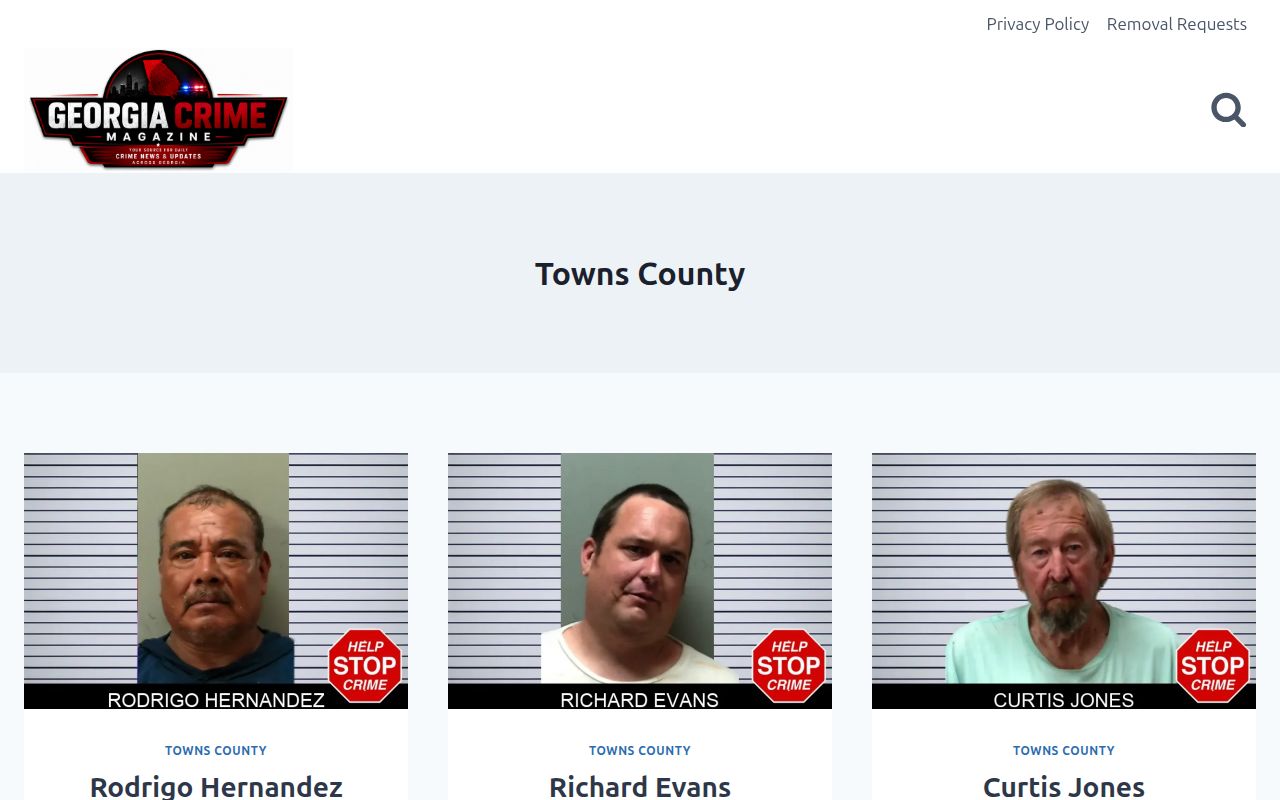
Use the index as a discovery aid only. Dates, identity, charges, and custody still need the sheriff and the court.
Weekend Arrests and Publication Lag
Weekend arrests land inside the weekly FetchYourNews window. One representative window closed on a Sunday. The post came out afterward. That gap shows a reporting rhythm, not the hour TCSO delivered its material. The Towns County Herald runs on the same weekly cycle. Printing schedules, corrections, holidays, and agency delivery all shape when an item surfaces. Someone arrested late in a week may miss the newest post. They might show up later. They might never appear in a news archive at all. No holiday-delay rule was ever published. For urgent answers, use the Arrests Last 24 Hours route. It starts with the jail instead of a news edition.
Towns Herald Arrest Archives
A second local path for Towns County arrest information is the Towns County Herald archive. The Herald works as the county's weekly paper and legal organ. Each issue prints an Arrest and Fire Reports section. Local law enforcement is named as the source, and names appear as received, alongside dates, ages, and charges. Not every issue lists booking numbers, bonds, or photos, so treat the paper as a name-and-charge record rather than a full jail roster. To trace older arrest reports, the Herald edition archive shows the weekly issue layout that helps you find them.
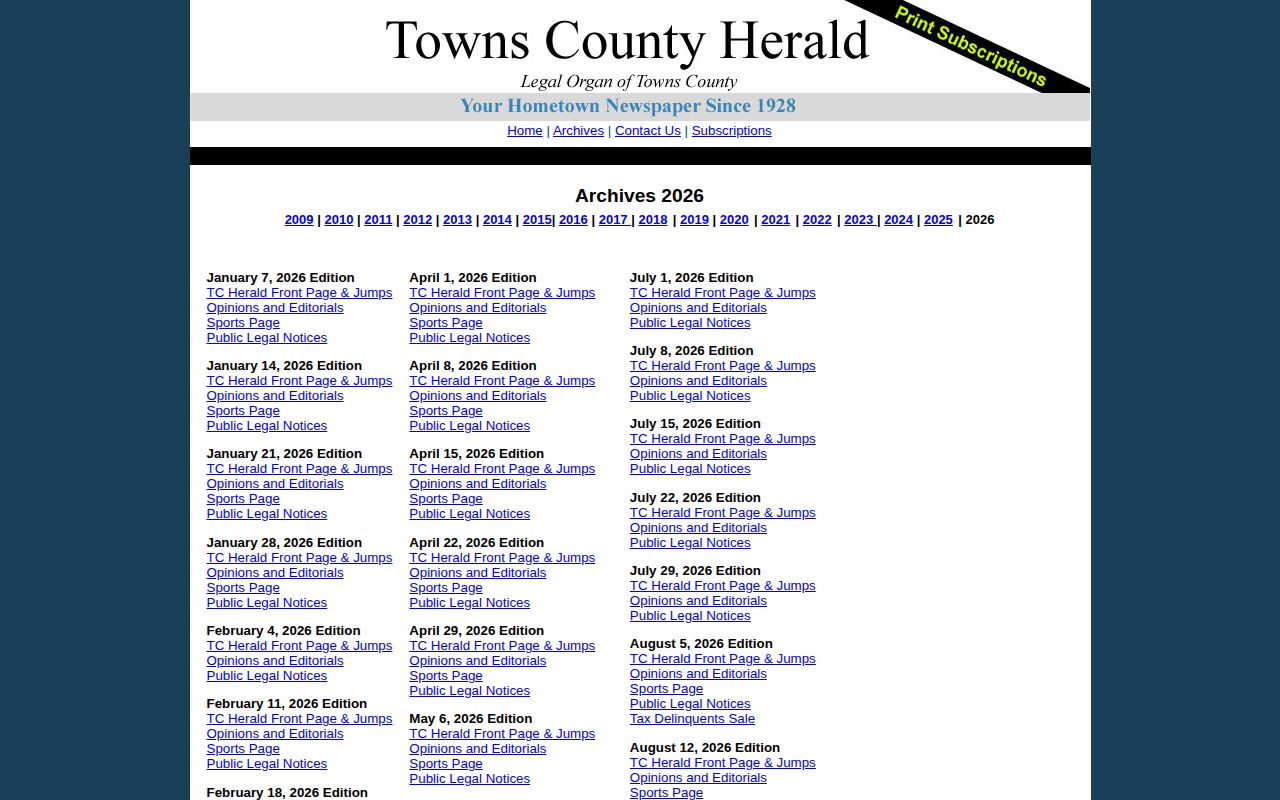
Names and charges still need agency and court checks.
Archive Older Towns Arrest Records
The FetchYourNews category spans multiple pages. The Herald's edition archive reaches back to 2009. Neither equals the government record itself. Georgia's retention schedule sets firm terms. Incarceration lists last one year. Jail booking records last ten years after release. Jail registers last ten years after the final entry. Those are administrative minimums, not promises of online access or proof that Towns kept an item. A missing week calls for both news archives plus a date-bounded TCSO request for the booking record or jail register of a named person. The official form accepts email or scan, mail, and hand delivery. Case results come from the clerk or Georgia Courts eAccess, while Georgia Archives and the Digital Library of Georgia handle older records, not current custody. The Georgia Archives schedule page explains the state retention rules behind older county requests.
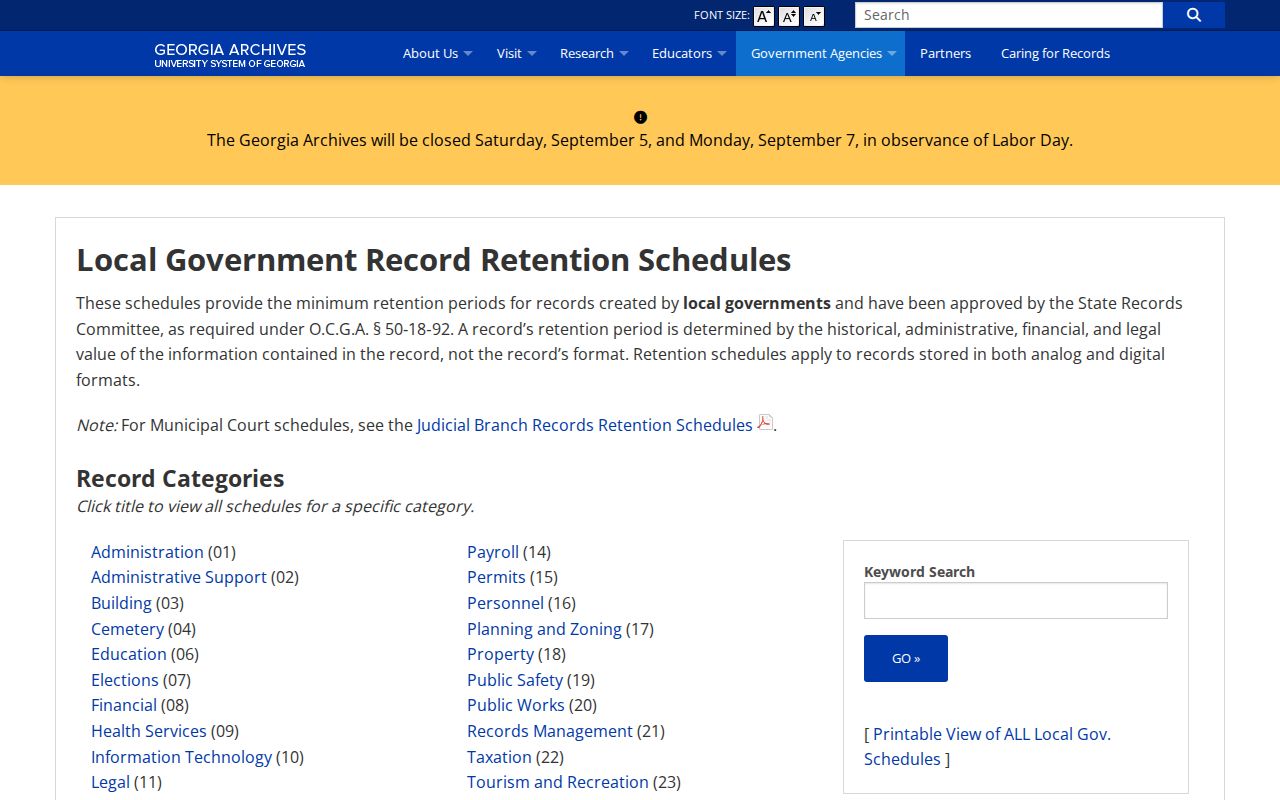
Retention schedules tell you how long an arrest record should exist. They do not put it online, and they do not lift any access restriction on the file itself.
Towns Enforcement News Is Different
Towns County enforcement news runs on events, not schedules. A checkpoint story, a highway-safety push, or a drug bust appears when it happens. Then it goes quiet. No official checkpoint log is published on a recurring basis. That makes a news story a poor stand-in for a booking roster. Both may describe arrests. Regional outlets also lean on scene photos. Those are not booking images. FetchYourNews and the Herald both cover Young Harris and Hiawassee countywide. A city tag on a story does not prove where the arrest happened. A Hiawassee case might belong to Hiawassee Police. County planning records, though, show Young Harris depends on TCSO. Before you file any entry under a city, stop. Pin down the arresting agency and the booking facility first.
Verify Towns Blotter Charges
Start with a call to the detention center. Ask about current custody. The agency record comes from TCSO Open Records. From there, use the Enotah Judicial Circuit clerk or Georgia Courts eAccess. That shows the filed case. Someone listed in an old report may already be out of jail. A person moved to state prison after sentencing shows up elsewhere. Use the Georgia Department of Corrections search, not a county blotter.
A missing archive entry does not mean no arrest occurred. Nor does it clear anyone. A stale news item, in the same way, does not mean a charge is still pending. Each source answers one narrow question. So compare dates, custody, and court disposition before drawing a conclusion.